
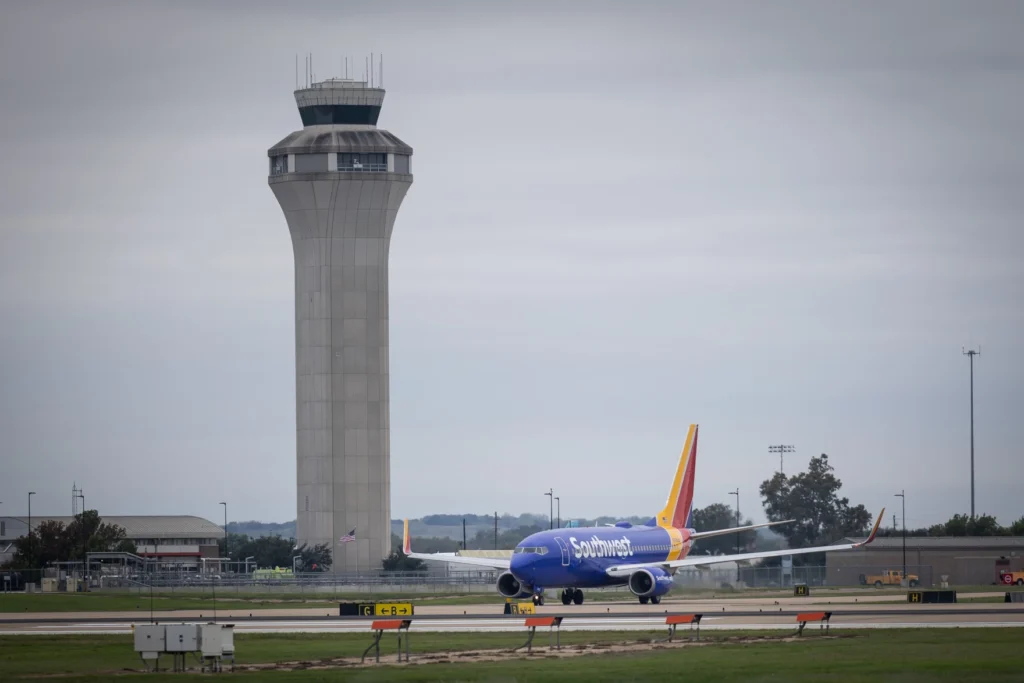
If your airport still relies on analog crash phone circuits — physical copper lines running between your tower and ARFF station — you already know the risks. Those lines age, get damaged during construction projects, and offer no redundancy when they fail. A growing number of airports are making the switch to IP-based crash phone systems, and the results speak for themselves.
Traditional crash phone setups typically consist of a button in the tower that triggers an alarm — a siren or beacon — connected to the ARFF station via a dedicated physical line. The system works until it doesn't. Construction projects can sever buried cables. Aging wiring degrades over time. And when that single point of failure goes down, your emergency notification capability goes with it.
Many airports discover this vulnerability the hard way. A recent conversation with a regional airport in Pennsylvania revealed a common scenario: a parking lot expansion project ran into their buried crash phone line, threatening to sever the only notification path between the tower and their maintenance shop. Their response? Searching for an IP-based alternative that eliminates the dependency on dedicated physical cabling entirely.
Modern crash phone solutions ride on your airport's existing IP network — the same network infrastructure that supports your computers, phones, and security systems. Instead of running separate copper lines between buildings, the crash phone system uses the airport's LAN to connect endpoints like phones, speakers, strobe lights, and notification devices.
This approach offers significant advantages. Your airport has already invested in making its network redundant and secure. An IP crash phone system leverages that investment rather than duplicating infrastructure. Most IT departments simply create a VLAN — a logical carve-out on the existing network — to keep crash phone traffic isolated and secure.
The endpoints themselves are powered over Ethernet (PoE), meaning a single Cat 6 cable provides both data connectivity and electrical power. No separate power runs, no additional electrical work — just plug into a PoE switch and the device is online.
The benefits go well beyond eliminating vulnerable analog lines. IP-based systems enable capabilities that simply aren't possible with legacy technology:
Multiple alert types: Instead of a single alarm tone, the tower can select from different alert categories — crash alerts, medical emergencies, fuel spills, wildlife incidents, or daily tests. Each alert type can trigger different notification groups, different strobe colors, and different pre-recorded announcements. Your ARFF team gets the right information immediately, not a generic siren that requires a follow-up radio call.
Scalability from simple to sophisticated: A small regional airport might start with a phone in the tower and a contact closure at the ARFF station — functionally identical to what they have now, but running over the network. Over time, they can add speakers, strobes, mobile app notifications, and integration with platforms like Everbridge or operations management systems, all without replacing the core system.
24/7 endpoint monitoring: Every device on the system is checked automatically every 30 seconds. If a phone, speaker, or strobe goes offline, both the airport and the vendor are notified immediately. Compare that to analog systems where a severed line might go undetected until someone actually needs it in an emergency.
No dependency on public Internet: The system runs on your internal airport network. If your ISP goes down, your crash phone keeps working. The only external connectivity requirement is for optional features like remote vendor support or speech-to-text processing.
Airports don't have to rip and replace everything overnight. A practical migration starts with the core: a server (physical or virtual), a phone in the tower, and contact closure adapters that can trigger your existing alarms and sirens. If the tower already has a button that energizes a circuit to set off an alarm, the IP system can mimic that exact behavior — the only thing that changes is what they press in the tower.
If your airport already has a virtual server environment, the turnaround can be as fast as two weeks from purchase order. The contact closure devices and IP phones are standard stock items. The server software installs on a virtual machine on your existing hardware, so there's no waiting on specialized equipment.
One of the most compelling aspects of an IP-based emergency notification system is its versatility. Airports using these systems have deployed them for scenarios well beyond traditional crash alerts:
Lightning detection warnings with multi-color strobe lights around the terminal. Snow removal notifications pushed to tenant phones. Human trafficking awareness phones in terminal restrooms that auto-dial airport police. TSA checkpoint plunger buttons that simultaneously call law enforcement and play pre-recorded passenger rerouting announcements over the terminal PA.
These use cases don't require separate systems. They're additional configurations on the same platform, using the same network infrastructure, managed from the same interface.
The first step is understanding your current setup: What does your existing alarm circuit look like? Is your airport network present in the tower and ARFF areas? Do you have a virtual server environment? With those answers, a vendor can scope a solution that replaces your aging analog infrastructure, provides immediate reliability improvements, and gives you a growth path for enhanced capabilities down the road.
The airports that have made this transition aren't looking back. Improved response times, eliminated single points of failure, and the ability to scale notification capabilities as needs evolve — that's what a modern crash phone system delivers.
Ready to modernize your airport's crash phone system? Click here to see more about KEANS Airport Crash Phone solutions or contact KOVA Corp to schedule a live demonstration.
